Project DUSTORM
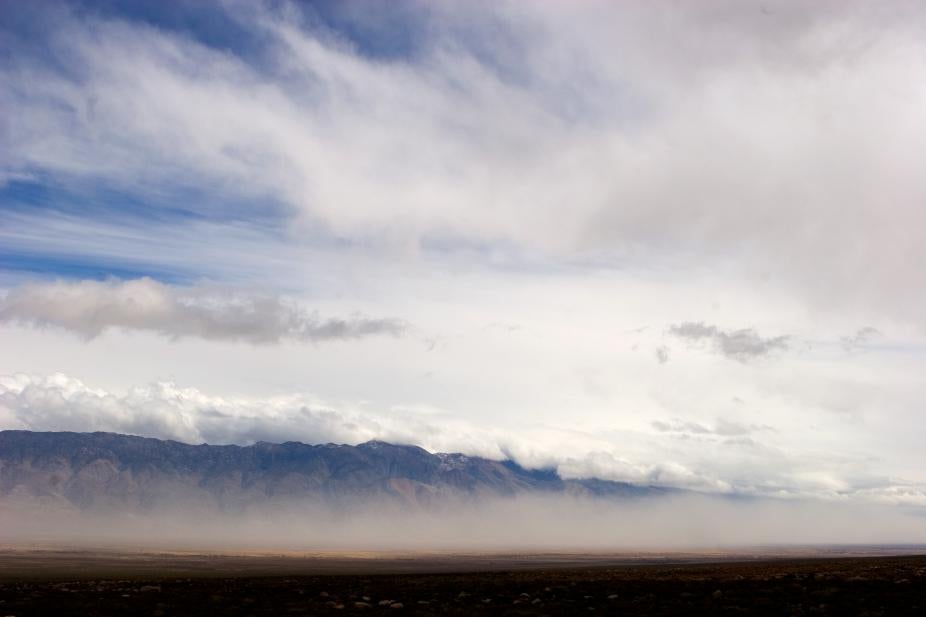
A dust storm blows through the valley near Independence, CA during the T-REX (Terrain-induced Rotor Experiment) field experiment. T-REX was an effort to explore the structure and evolution of atmospheric rotors (intense low-level horizontal vortices that form along an axis parallel to, and downstream of, a mountain ridge crest) as well as associated phenomena in complex terrain.
UCAR
Project DUSTORM
The Experiment
Could a dust storm in New Mexico influence a thunderstorm in Missouri?
The scientists behind Project DUSTORM aimed to answer just that question. With scientific aircraft stationed around the country and help from citizen scientists, NSF NCAR researchers investigated how airborne particles like dust impacted the formation of hail and thunderstorms across the central United States. This research helped improve weather forecasts, particularly for dangerous or damaging storms.
Scan the QR code to read the Staff Notes article about Project DUSTORM.
The Instruments
Many scientific instruments are designed and fabricated on site at NSF NCAR!

This air intake was mounted on a research aircraft to bring air samples into the aircraft for later study. Researchers flew through storms to gather information about the storm conditions, including collecting samples to learn more about particles in the air that may have an impact on the storm.

This variable width slit jet impactor was developed specifically for Project DUSTORM. It was designed to allow scientists to control the size of the airborne particles, or aerosols, that were collected. This instrument filtered out smaller aerosols. Once the particles were filtered through the impactor, they were collected on microscope slides for later study.

The air intake and variable width slit jet impactor are shown here as part of an exhibit on Project Dustorm in the Mesa Laboratory Library in 2024. These artifacts may be viewed at the Mesa Lab during weekday business hours.
In these photos scientists and engineers outfit an aircraft with the instruments needed to collect data for the experiment.
Can you spot the instruments mentioned here in any of the images?

Instruments are gathered for installation on research aircraft for project DUSTORM.

Person works on installing instrumentation on research aircraft for Project DUSTORM.

The NSF/NCAR Queen Air in flight during Project DUSTORM.
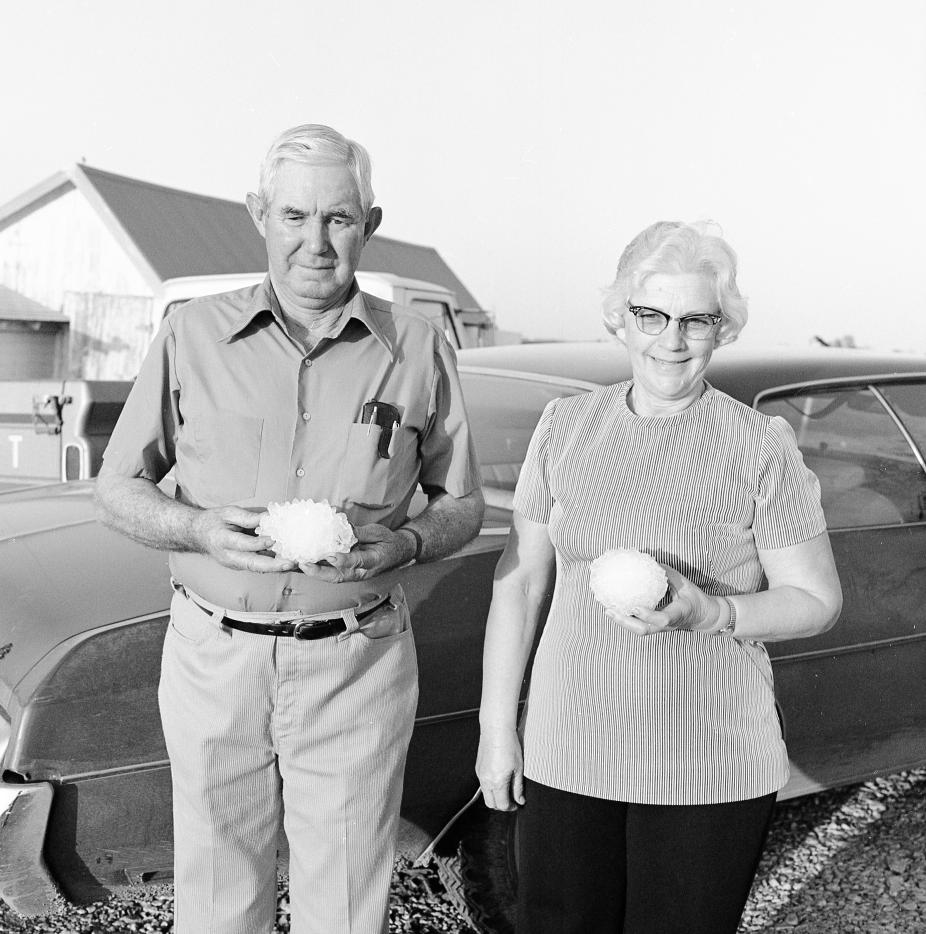
A farmer and his wife, residents of rural Missouri, collected hailstones in the spring of 1975 for Project Dustorm, a collaborative project to examine thunderstorms and hail formation.
UCAR
Citizen Scientists
DUSTORM researchers enlisted residents in states including Oklahoma, Missouri, Iowa, and Indiana to collect hailstones, bag them, and freeze them. Once the hail samples were retrieved, NSF NCAR scientists studied their composition to learn more about how they formed.
Researchers were particularly interested in hailstones larger than a walnut--and this team nailed it!
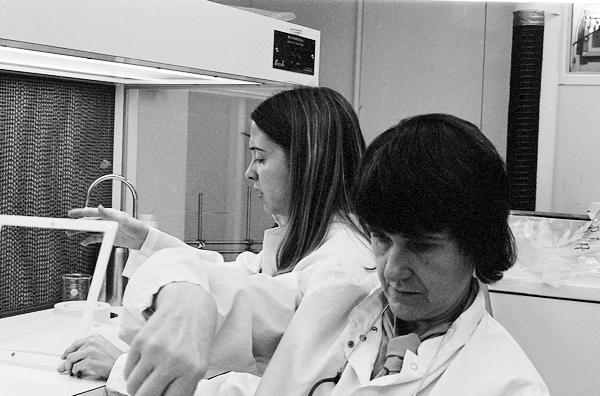
Student Lynn Bolton (left) and Sonia Gitlin, who was a scientist in the Atmospheric Chemistry and Aeronomy Division, work with samples from Project DUSTORM.
UCAR
The Research
Student Lynn Bolton (left) and Sonia Navia Gitlin, a scientist in the Atmospheric Chemistry Division, study hailstones collected during Project DUSTORM.
Scientists analyzed data collected from aerosol samples, hailstones, and weather stations to learn more about how storms form, and to better predict severe weather.
Scan the QR code to learn more about Project DUSTORM outcomes.